
Emily Jaye & V. Arrow
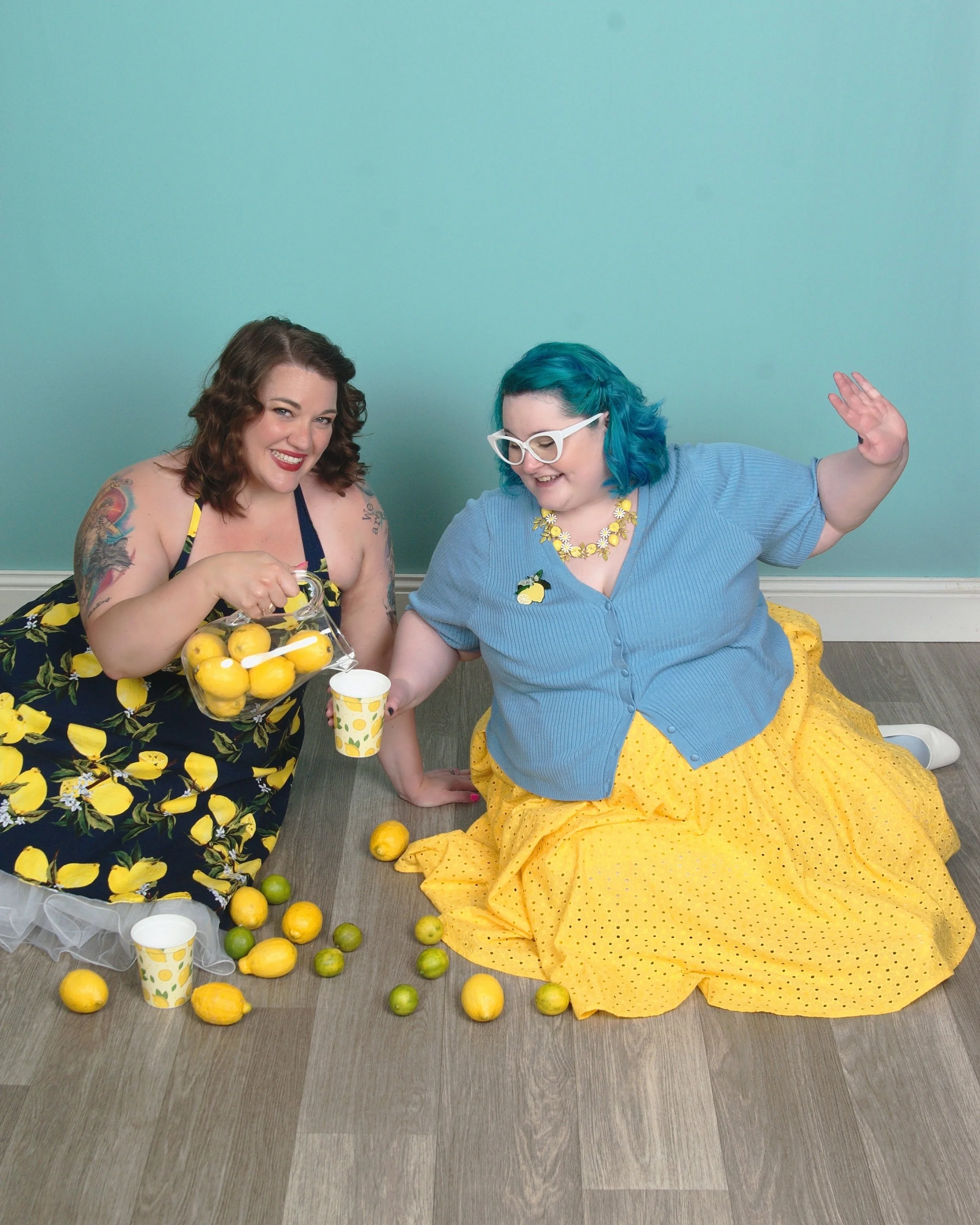
Emily and V. are the co-hosts of This Week in Fandom History.
Describe your podcast in 10 words or less
V: Lifelong fangirls discuss why fandom events mattered, giggling often.
E: Where legendary fandom drama, memes, and milestones are lovingly unpacked.
What’s the wildest piece of fandom history you’ve covered on the podcast?
E: I have to say that learning that the Starsky & Hutch fandom was the first to create fanvids (by painstakingly physically editing film with scissors and tape like the pros!) in the late ‘70s… and that they immediately cut episodes together with available adult films to make Starsky & Hutch porn is probably my favorite nugget of information I’ve come across.
V: I totally thought yours would have been the Hamilton Cannibal Mermaid HIV drama, Emily! Which, readers, yes: that is both word salad and a real thing that happened.
E: Wait! I lied! I mean, those things are both at the top of the list (especially that Hamilton Cannibal thing because… Wow.) But more recently, I have to acknowledge the UTTER INSANITY of the Yunjae Yaoiphenomenon and its far-reaching ramifications. Holy cow. What a ride.
What’s one thing mainstream media gets wrong about fandom culture?
E: Fandom culture is so often reported on through a lens of ‘these people are crazy/pathetic/sad/etc.’ as if the only thing fans have in their lives is their love of a book/movie/comic/show. There’s rarely any mention of the fringe benefits of being a part of fandom – the friends you make, the community you build, the art you get to experience and create. I think the tide is turning on this a little bit now that fandom is becoming more mainstream, but there’s still a majority of audiences that hear “fandom” or “fanfic” and think “Comic Book Guy.”
V: Fanfiction has always existed alongside published writing, not as part of the pipeline to publication – and that doesn’t make it worse! If we look back at fanzines in the 1930s, their goals were totally separate to those of “prozines,” or zines that were intended to help their authors launch professional scifi writing careers.
Fanfiction is more akin to the oral tradition of storytelling than modern publishing, in that the goal is to build community through the sharing of story, rather than to profit (because legally, you can’t profit on fanfiction!). It’s a place where storytelling is pure id. And that’s great!
But now that there have been more than a couple of major books/franchises that began their lives as fanfiction, people who are uninterested in community-building have started to view fandom as a marketing tactic rather than a subculture with its own goals, norms, and ethics. I would love to see people halt the “fanfiction is a side hustle” train in its tracks before it even leaves the station.
If you could invite a celebrity (living or dead) to your podcast, who would it be and why?
V: We have a running gag on the show that Lance Bass is our best friend and worst enemy. I forget why we even initially tried to reach out to him, but it turned out to have been the week that *NSYNC reunited at the VMAs, so we obviously didn’t get a response. Ever since, any time we would benefit from the opinion of a celebrity, we wish we could turn to Our Best Friend And Worst Enemy, Lance Bass.
Have you changed your opinion about any fandom while creating an episode?
V: Hmm… that’s a good question! I think more than changing my mind about fandoms that I already knew a bit about or had seen from the outside, TWIFH has introduced me to new fandoms. Like, even though I host a fandom podcast, I had never actually watched Star Trek before (other than the tribble episode that everyone was born having seen). Now I’m loving the journey as I watch TOS!
Also, one of our favorite older fandoms that keeps popping up is the Canadian vampire cop procedural Forever Knight, which prior to TWIFH I had never heard of in 20+ years of being in fandom. Now I want to seek out the episodes, and I’m so sad that I can’t join the old early-’90s mailing list communities where its fandom took place, because it seems like they were just having the best time ever.
E: I don’t want to out any fandom in particular, but there are certain fandoms that I was only vaguely familiar with, while V was deep in the trenches. So every time she covers some of their antics in an episode, my opinions have gone from, “Oh, right, that fandom. I’m sure they’re a totally rational group of people like the fandoms I’ve experienced in the past,” to “Oh my. No, no, thank you. I won’t be engaging with any of this.”
Fanfiction, be it reading or writing it, often gets a questionable rep in high-brow literary circles. Thoughts?
E: No thoughts, just outrage.
Actually, some thoughts. And those are that anyone who looks down their nose at fanfic, either reading or writing, needs to examine their literary history and realize how many beloved literary characters can be traced to something along the lines of fanfic. Be it works based on the Bible, or mythology, or other historical texts, just about everything is a transformative work of something that came before.
Not to reiterate everything that V expertly stated above, but I’d be curious to see how many people feel the need to engage in anti-fanfic snobbery simply because there is no money to be made. Either way, I feel bad for those people – sorry your life is so boring that you have to look down on people who engage in reading and writing simply out of love for a story or characters.
Let’s get you some whimsy, folks.
V: I also think that people are judging apples and cinderblocks.
I have an MFA in Creative Writing, and I honestly just view fanfic-writing as a completely different skillset and goal-set than non-fanfic writing. Genuinely, genuinely, genuinely: becoming good at fanfiction does not build your original-novel-writing muscles. And vice-versa!
What do your parents/friends think your podcast is?
E: Most likely, they think it’s “just more of that fanfic stuff she’s always talking about.” But to be fair, I haven’t asked them for their specific opinion.
V: It’s neither of our first fandom podcast (Emily hosted I Ship It for years, and my COVID project was I Met You On LJ) so I think our friends and families are pretty used to our nonsense by now. And most of our fandom friends listen!
Fill in the blank: You’ll like This Week in Fandom History if you love ____.
V: Goncharov.
E: Your obscure historical facts served with a side of giggles and occasional outrage.
What is your dream podcast to collaborate with?
E: It’s gotta be “Frosted Tips,” right? How better to solidify our frenemyship with Lance Bass than to collaborate in the podcast realm?
My other dream collab would be with Karina Longworth of You Must Remember This. Simply because I adore learning about the Golden Age of Hollywood, and she is such a font of knowledge in this arena. So far, we haven’t had a chance to explore many 1940s–1950s fandoms, and I’d love to hear if she has any stories about fans from that era, so we can add them to this tapestry we’re creating of fandom history.
V: I’m just saying, I think Lance Bass and the two of us could really learn from each other.
I also feel like collaborating with a more mainstream women’s historian like Lucy Worsley would be really validating. Fandom was built by, and for, women and other gender-marginalized people, and telling the stories of women and trans/nonbinary folx who built fandom spaces is my favorite aspect of TWIFH.
Especially looking back at the origins of modern fandom, with women in the 1960s starting these powerhouse Star Trek fan clubs that completely changed American pop culture… fandom is really a subculture of women and trans/nonbinary folx having the agency and autonomy to act according to our own desires, and using that opportunity to build community. And that is so, so important.
Sure, Spock ears are silly. But the original fannish Spock ears were knitted in church basements by women who wanted to spend their little free-time with other women who felt the same way about that Vulcan, you know? And they were driven just by love. No one was making money. No one thought they would Change Pop Culture Forever. They just wanted to hang out with like-minded women, and they took the steps to make that possible. And it changed the world!
So it would be really gratifying to see fandom stories more recognized as part of the larger idea of history. They ARE history.
Thanks, Emily and V!